With the actual U.S. Census data, the Mississippi Legislature can begin what can be a contentious chore of redrawing the state's 174 legislative districts and four congressional districts.
Lawmakers have held hearings throughout the state to get comments from citizens as they begin the process, using the 2020 estimates that were made available before the actual count was released earlier this month.
That data is relatively accurate, with only a 0.335 percent difference between the census estimates (performed annually) and the actual count.
“The estimates have been used in the past and they provide us with a roadmap for what parts of the state have gained population and what parts of the state have lost population,” said state Rep. Charles Jim Beckett, R-Bruce at the August 19 meeting at the University of Southern Mississippi. He chairs the Joint Legislative Committee on Reapportionment and Joint Congressional Redistricting committees.
He also said lawmakers will receive new data on September 30, but he also said changes from the August numbers that affect the drawing of districts is unlikely. The drawing of U.S. congressional districts will be completed by the fall, with the legislative districts following during the 2022 session.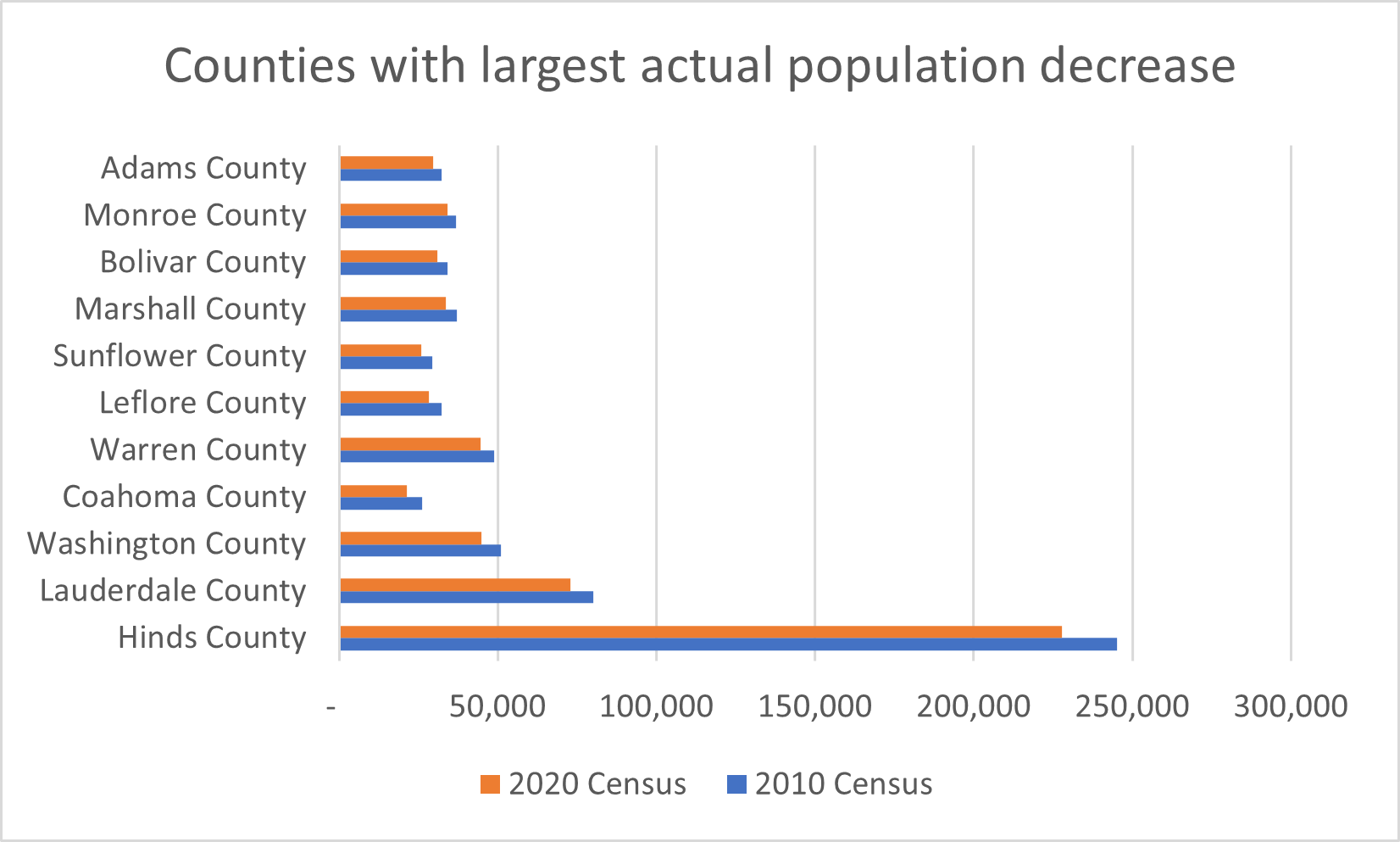
The census data released in April for apportionment purposes showed the state lost 6,018 residents as compared to the 2010 census, the first population loss in 60 years.
According to these numbers, each of the Senate's 52 members will represent about 56,998 residents. That marks a decline from 2010 when each senator represented 57,063.
In the House, each of its 122 members will represent about 24,294 people. In 2010, that number was 24,322 per representative.
The requirement in the Mississippi Constitution is that legislative boundaries be contiguous. In addition, state law requires them to be compact and cross as few political boundaries as possible. Once the line-drawing process is complete, lawmakers will pass a joint resolution with the district lines that isn't subject to a veto by the governor.
The biggest winners in terms of added representation, according to the census data, were: the three coastal counties of Hancock, Harrison and Jackson; Lafayette County; and suburban counties such as DeSoto (Memphis, Rankin and Madison counties (Jackson) and Lamar County (Hattiesburg).
The biggest loser was Hinds County, which lost 17,543 residents compared to the 2010 census, a loss of 7.2 percent of its population. Madison and Rankin counties took advantage of the exodus, growing by 14.6 percent (13,942 new residents) and 10.9 percent (15,414 new residents) respectively.
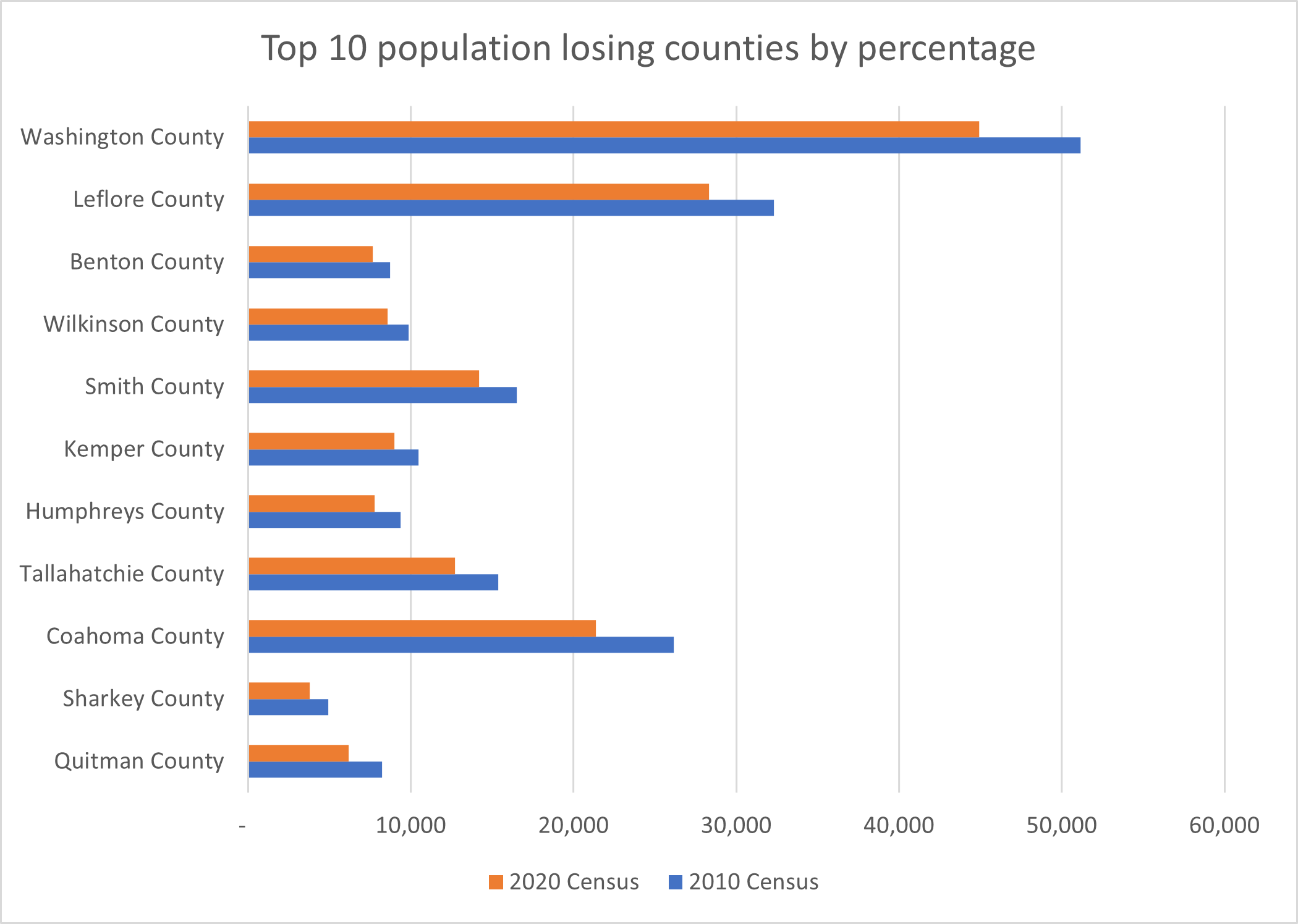 Quitman County was the biggest loser by percentage, losing nearly 25 percent of its residents from 2010 as its population shrank from 8,223 residents to 6,176.
Five Delta counties (Washington, Sunflower, Coahoma, Leflore and Bolivar) lost a combined 21,593 residents in the last decade. That was not as bad as estimates of more than 26,000 residents having moved out of those five counties.
Sixty four of the state's 82 counties lost population while only 12 had a gain of 1,000 or more residents.
Another county that lost more than 6,000 residents was Lauderdale (7,277 residents or a 9.1 percent loss).
DeSoto County remains the fastest growing county in the state, with 24,062 new residents (14.9 percent gain from 2010. That would be a new House district just in the county alone.
The Coast is becoming a major population center for the state, with the three coastal counties gaining 27,224 in new population in the last decade, with most of that in Harrison County (21,516 gain or nearly a new House district).
LaFayette County had a population jump of 17.9 percent or 8,462 residents, while Lamar County gained 8,564 new residents for an increase of 15.4 percent.